
オアスペ | サファの書
Osiris
Osiris
ひと目でわかる超要約「Osiris」の要点
この章の要約・解説サファの書「Osiris」――オシリスとは、解き明かせば、こうである。我は光であり、命であり、死である。我自身から、我は生きるすべてのものを作った。太陽を我は我が力のしるしとして大空に置いた。星々と月と、語らず知らないものたちは、我が手の業である。我… Mi、または Mira(パン語)。Mi、霊、My'ra、地の霊(英語)。Mary、子羊(霊)。 Mug(パン語)、哲学者。肘で体を支えている人のしるし。その主題は、書板の中でのその相対的な位置によって決まる。 598:* 四百七十万年に等しい。
節ごとの構成と要点(全5節)
- 章題・導入の要旨冒頭詞書
オシリスとは、解き明かせば、こうである。我は光であり、命であり、死である。我自身から、我は生きるすべてのものを作った。太陽を我は我が力のしるしとして大空に置いた。星々と月と、語らず知らないものたちは、我が手の業である。我…
- Mi、または Mira(パン語)(図版を含む)第55〜70節
Mi、または Mira(パン語)。Mi、霊、My'ra、地の霊(英語)。Mary、子羊(霊)。 Mai または A'Mair(パン語)、表された、印をつけられた。上訴のできない王の署名。 Cow、受け入れる力(パン語)。Cow、動物(パン語)。新しいものを受け入れるどんな人も。
- Su'Tau(パン語)(図版を含む)第71〜89節
Su'Tau(パン語)。自己主張。神託で仕えた霊たちは Su'tau を現し、彼らの内には道理がなかった。 Sam'hoi(パン語)、Sam'howh(チネ語)、秋。 Ho'Joss(パン語)、人なる神(Ghad)。角のある人の顔。下の天の神。我が地上に平和を送るために来たと思うな。
- Plow(パン語)、船(図版を含む)第90〜108節
Plow(パン語)、船。Oniyyah(フォネセ語)。船乗りたちが発する音。彼らは、plow が航海したかどうかを知るために、星 Hiyalavi を見張った。 Che または Kouak'che(パン語)、コンパスとカリパス。Koakchah(チネ語)。 Git'um。大祭司は月の上にしるしを置く…
- Git'ow'wn(パン語)(図版を含む)第109〜121節
Git'ow'wn(パン語)、黄道帯に、あるいは太陽の動きに関わるもの。大祭司は Um(槍)によって、太陽と月と星々の動きを示すであろう。 S,'Pe または spe(パン語)、霊。 598:* 四百七十万年に等しい。
用語・象徴の読み方
- サファ(Saphah)とパニック語(Panic)
- 太古のパン大陸の言語(パニック語)に由来する聖なる文字・象徴・秘儀の言葉の体系。
- アフ(Aph / ジェホヴィの息子)
- コスモン紀元前2万4千年頃、パン大陸(ウィアガ)を太平洋へ沈めて地球と下部天界の腐敗を浄化する大事業を指揮したエセレアの高位神。
- パン大陸(Pan / ウィアガ)
- かつて太平洋に存在した巨大な大陸。霊的退廃と低級霊の充満を浄化するため、2万4千年前のアフの周期に海中に沈められた(大洪水伝承の原型)。
- スー(Sue / ジェホヴィの息子)
- パン大陸の沈没ののちの周期にエセレアから降臨した神(ジェホヴィの息子)で、アフの同伴の神であり最も親しい友。
OSIRIS.
オシリス。
OSIRIS, being interpreted, is: I am the Light, the Life and the Death. Out of myself made I all that live. The sun I placed in the firmament as a sign of my power. The stars and the moon and things that speak not and know not are the works of my hand. I am the Tau and the Sed (Taurus and Aries, bull and lamb), the power and wisdom over all and within all. Without me nothing is, nor was, nor ever shall be (Aribania). The spirit of self-assertion; tyranny; to enslave; to master others per force. Tow (Aii). The self-assuring man, or spirit. Y'taw (Vede). Tau'baw, a bull, or Ti'taw, I am the T'taw. I am the master at the bridge Chinvat. Without my will none shall rise to Nirvana, my upper heavens. Through my good-will only shall any man ascend. I am the Judge and Savior of men. On my forehead resteth the sun; the stars are my cattle. In worship of me the stars and the sun plead before me. The horses have I placed over the cows. The moon (Mas) cringeth beneath my feet. I am war, I am Thaw, a bull. My bulls shall be the edicts of kings. Who worshipeth not me, him will I destroy (Vede). Toe'phi, the All High Spirit, next to Om, wife of Eolin. Toe'phi is my Savior; he will redeem. (Chine). Itaura, Itura (Algonquin). Toe (Ebra). Toe (Hebrew). Toe (Fonece). Wild, unreasonable. Destroyer of liberty.
オシリスとは、解き明かせば、こうである。我は光であり、命であり、死である。我自身から、我は生きるすべてのものを作った。太陽を我は我が力のしるしとして大空に置いた。星々と月と、語らず知らないものたちは、我が手の業である。我は Tau であり Sed である(牡牛座と牡羊座、雄牛と子羊)。すべてのものの上にあり、すべてのものの内にある力と知恵である。我なしには何もなく、何もなかったし、何もありはしないであろう(アリバニア語)。自己主張の霊。暴政。奴隷にすること。力ずくでほかの者たちの主人となること。Tow(アイイ語)。自分を確信している人、または霊。Y'taw(ヴェーデ語)。Tau'baw、雄牛、あるいは Ti'taw、我は T'taw である。我はチンヴァトの橋の主人である。我が意志なしには、誰も我が上の天々、ニルヴァーナに上らないであろう。ただ我が好意を通してだけ、人は上るであろう。我は人の裁き手であり救い主である。我が額には太陽が休み、星々は我が家畜である。我を崇めて、星々と太陽は我が前で嘆願する。馬たちを我は牛たちの上に置いた。月(Mas)は我が足の下で縮こまる。我は戦争である。我は Thaw、雄牛である。我が雄牛たちは王たちの布告となるであろう。我を崇めない者は誰でも、我は滅ぼすであろう(ヴェーデ語)。Toe'phi、Om に次ぐすべての高き霊、Eolin の妻。Toe'phi は我が救い主である。彼は贖うであろう(チネ語)。Itaura、Itura(アルゴンキン語)。Toe(エブラ語)。Toe(ヘブライ語)。Toe(フォネセ語)。荒々しい、理不尽な。自由の破壊者。
55. Mi, or Mira (Panic). Mi, spirit, My'ra, spirit of earth (English). Mary, lamb (spirit). Mi'ra, a virgin, was before man a dweller on the earth, nor was there any man for her. The All Unseen conceived her. Her son was Sir'za (Poit). Si'us (Kii). Osiris (Aribania). Mi, mother of all men; spouse of the Unseen (Tau). The earth was Mi, and Mi was the earth. The Great Spirit moved on the earth and the earth conceived and brought forth man. Mithra (Vede). Mother of Gods (king spirits). The sons of Mi were all I'su, free from sin. Save ye pray to Mithra, then will not Tau save your souls. She, Mi, is our virgin mother. A sign, a face within a circle; also, written and painted, a woman with a child.
55. Mi、または Mira(パン語)。Mi、霊、My'ra、地の霊(英語)。Mary、子羊(霊)。処女 Mi'ra は人より前に地上に住む者であり、彼女のための男はいなかった。すべての見えない方が彼女をはらませた。彼女の息子は Sir'za であった(ポイト語)。Si'us(キイ語)。Osiris(アリバニア語)。Mi、すべての人の母。見えない方の配偶者(Tau)。地は Mi であり、Mi は地であった。大いなる霊が地の上に動き、地ははらんで人を生み出した。Mithra(ヴェーデ語)。神々(王の霊たち)の母。Mi の息子たちはみな I'su であり、罪がなかった。あなたたちが Mithra に祈らないかぎり、Tau はあなたたちの魂を救わないであろう。彼女、Mi は私たちの処女の母である。しるし、円の内の顔。また書かれ描かれたものとしては、子を抱いた女。
56. A'ji (Gau), semi-dark. There are places in the firmament of heaven not all light, nor yet all dark. Ar'ji (Poit). When the earth passeth through A'ji (Panic), it aggregateth and groweth. An abundance of Dar'ji in the firmament giveth a cold year upon the earth (Kii). In the years of Ar'jon mortals became warriors. Now it came to pass that for seven hundred years the earth encountered not Ha'ji (Chine), and war ceased on the earth, and men were gentle, and killed not any living thing. Out of A'ghi maketh Jehovih a new world. Save your prophets understand A'ji, they can not tell what the next year will be. Let man build consecrated chambers in my temples that my spirits in heaven may come and explain Ha'jhon, and they shall be provided against famine and pestilence (Algonquin). The foolish man knoweth not A'jon, for mortals can not see him.
56. A'ji(ガウ)、半ば暗いもの。天の大空には、まったく光でもなく、まったく暗くもない場所がある。Ar'ji(ポイト語)。地が A'ji(パン語)を通り抜けるとき、それは寄り集まり、成長する。大空に Dar'ji が豊富にあると、地上に寒い年をもたらす(キイ語)。Ar'jon の年に、死すべき者たちは戦士となった。さて、七百年のあいだ地が Ha'ji(チネ語)に出会わなかったということが起こった。そして戦争は地上でやみ、人々は穏やかで、どんな生き物も殺さなかった。A'ghi から、ジェホヴィは新しい世界を作られる。あなたたちの預言者たちが A'ji を理解しないかぎり、彼らは次の年がどうなるかを告げることはできない。人に我が神殿のうちに聖別された部屋を建てさせよ。天にいる我が霊たちが来て Ha'jhon を説明することができるように。そうすれば彼らは飢饉と疫病に対して備えられるであろう(アルゴンキン語)。愚かな人は A'jon を知らない。死すべき者たちは彼を見ることができないからである。
57. Ji'ay (Panic). Ji'ya (Gau). Semi-light. There are three places in the firmament, light and semi-dark. The fourth is Corpor. Thus, ether, the most rarified place; Ji'ay, the second place, less rarefied; A'ji, the third place (nebulous places in the firmament), and fourth, the corporeal worlds. As out of the ether I make A'ji, so out of Jy'ay make I corpor. (Kii.) Hy'ghi (Chine). Beware of evil spirits in the time of Jy'ay, for they shall train the corporeal senses of men to believe they lived before. (Chine.)
57. Ji'ay(パン語)。Ji'ya(ガウ)。半ば明るいもの。大空には三つの場所がある、光と半ば暗いもの。四番目はコーポルである。このように、エーテル、最も希薄な場所。Ji'ay、二番目の場所、より希薄でないもの。A'ji、三番目の場所(大空の星雲状の場所)。そして四番目、コーポルの世界。エーテルから我が A'ji を作るように、そのように Jy'ay から我はコーポルを作る(キイ語)。Hy'ghi(チネ語)。Jy'ay の時には悪い霊たちに気をつけよ。彼らは人のコーポルの感覚を、以前に生きたと信じるよう仕込むであろうから(チネ語)。
58. Dan'ha (Panic). The etherea, the highest place in ethereal worlds. Jehovih said: The sun I made as the head of a serpent, and his phalanx made I as the body of a serpent; thus made I the great corporeal serpent. To him gave I a circuit to travel in, and I numbered his time a thousand tuos and seven aka and four bi'jus *, for the sun coil. On the circuit have I placed my A'ji and my Ji'ay in many places, but my Dan'ha have I placed only in one thousand six hundred places. (A cycle of time is about three thousand years, sometimes more, sometimes less.) From Kosmon, the present time, back to Moses and Capilya, alias Capella, three thousand four hundred years; from Moses and Capilya to Brahma and Abraham, two thousand four hundred years; from Brahma and Abraham to Zarathustra, three thousand
58. Dan'ha(パン語)。エセレア、エーテルの世界の最も高い場所。ジェホヴィは言われた。太陽を我は蛇の頭として作り、そのファランクスを我は蛇の体として作った。このように我は大いなるコーポルの蛇を作った。彼に我は旅すべき周回路を与え、太陽のとぐろのために、その時を千トゥオと七アカと四ビジュ*と数えた。周回路の上に、我は我が A'ji と我が Ji'ay を多くの場所に置いた。しかし我が Dan'ha を、我は千六百の場所にだけ置いた。(時の周期はおよそ三千年であり、ときにはそれより多く、ときにはそれより少ない。)今の時であるコスモンから、モーセとカピルヤ、別名カペラにさかのぼって三千四百年。モーセとカピルヤからブラフマとアブラハムまで二千四百年。ブラフマとアブラハムからザラトゥストラまで三千
p. 599
599頁
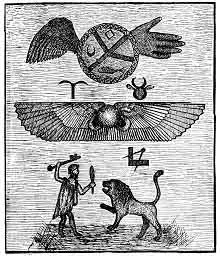
Plate 69.--This tablet belonged to the Egyptians in the Mosaic cycle, and was of the established religion of that day.
図版69 この書板はモーセの周期のエジプト人に属し、その時代の確立された宗教のものであった。
one hundred years; from Zarathustra to Osiris the first, three thousand three hundred years; from Osiris to Thor, three thousand two hundred years; from Thor to Apollo, two thousand eight hundred years; from Apollo to Sue, three thousand two hundred years; from Sue to Aph, three thousand six hundred years.
百年。ザラトゥストラから最初のオシリスまで三千三百年。オシリスからトールまで三千二百年。トールからアポロまで二千八百年。アポロからスーまで三千二百年。スーからアフまで三千六百年。
Dan'ya, the orbit of the solar phalanx (Gau). Dian'ya, the course of the cosmical phalanx (Puit). The light of Dan'ga is my timekeeper (Vede). Dh'a'yi, the light shining; the soul-fructifier (Pali). When Dang'hi cometh, the All-men grow in spirit; when he is past, man whetteth the sword and spear and entereth into blood. Deny Dang'hi and die in stubbornness of heart. (Poit.) Dan'ya foldeth Corpor p. 600 in his arms, but yet man seeth not him. (Chine.) The chosen of the Great Spirit shall maintain their blood through many Da'n'ga'has (Aribania). He was the sign of light standing on two legs of light. He is My symbol, saith Jehovih (Vede).
Dan'ya、太陽のファランクスの軌道(ガウ)。Dian'ya、宇宙のファランクスの進路(プイト語)。Dan'ga の光は我が時の番人である(ヴェーデ語)。Dh'a'yi、輝く光。魂を実らせるもの(パーリ語)。Dang'hi が来るとき、すべての人は霊において成長する。彼が過ぎ去ったとき、人は剣と槍を研ぎ、血の中へ入る。Dang'hi を否んで、心のかたくなさのうちに死ね(ポイト語)。Dan'ya はコーポルを(600頁)その腕に包むが、それでも人は彼を見ない(チネ語)。大いなる霊に選ばれた者たちは、多くの Da'n'ga'has を通してその血統を保つであろう(アリバニア語)。彼は光の二本の脚で立つ光のしるしであった。彼は我が象徴である、とジェホヴィは言われる(ヴェーデ語)。
59. Uh'Sauk, battle-ax (Panic). Yu'Saui (Poit).
59. Uh'Sauk、戦斧(パン語)。Yu'Saui(ポイト語)。
60. I'he (Panic). Eye (English). I'yhe (Poit). Ay'he (Gau). Hi'gin (Chine), the seeing; Ap'in (Fonece). Ay'in (Ebra), the seeing organ. I'ghe (Vede). I'hi or Ike'shi (Sanscrit). Ay'ke or Ay'ke'ra (Algonquin). Ayin (Hebrew). That that feeleth at a distance. I understand, I comprehend. Ay'ghin (Panic).
60. I'he(パン語)。Eye(英語、目)。I'yhe(ポイト語)。Ay'he(ガウ)。Hi'gin(チネ語)、見ること。Ap'in(フォネセ語)。Ay'in(エブラ語)、見る器官。I'ghe(ヴェーデ語)。I'hi または Ike'shi(サンスクリット)。Ay'ke または Ay'ke'ra(アルゴンキン語)。Ayin(ヘブライ語)。離れたところで感じ取るもの。私はわかる、私は理解する。Ay'ghin(パン語)。
61. Mai or A'Mair (Panic), expressed, marked out. A king's signature from which there is no appeal. If I am by Sa I mean death; if by Su, spirit; or by dang (light). I, Amar, have spoken. Expressly (Ebra). By his mouth he hath said, as the mouth openeth and uttereth, like an animal speaketh, Mai'ah (Algonquin). Expression, Ma (Chine).
61. Mai または A'Mair(パン語)、表された、印をつけられた。上訴のできない王の署名。もし私が Sa によるなら、私は死を意味する。もし Su によるなら、霊を。あるいは dang(光)によるなら。我、Amar は語った。はっきりと(エブラ語)。口が開いて発するように、動物が語るように、彼はその口によって言った、Mai'ah(アルゴンキン語)。表現、Ma(チネ語)。
62. Gee (Panic), ear (English). She (Kii). She'ma findeth azam. She, ear, Azam, that that cometh into. A symbol of an organ on the head. The letter G, and C, English. A symbol of judgment. Let the Che be above the altar as a sign that the E-O-Ih heareth. I'gee'how (Chine). The ear heareth. Pan'gee (Algonquin). Che (Ayn). Hy'che (Vede). Gee (Chine).
62. Gee(パン語)、ear(英語、耳)。She(キイ語)。She'ma は azam を見いだす。She、耳。Azam、入って来るもの。頭の上の器官の象徴。英語の文字 G と C。裁きの象徴。E-O-Ih が聞いておられることのしるしとして、Che を祭壇の上に置かせよ。I'gee'how(チネ語)。耳は聞く。Pan'gee(アルゴンキン語)。Che(アイン語)。Hy'che(ヴェーデ語)。Gee(チネ語)。
63. F'si (Panic), west. F'si (Chine). Te'si (Algonquin). Ty'sy (Vede). In the west.
63. F'si(パン語)、西。F'si(チネ語)。Te'si(アルゴンキン語)。Ty'sy(ヴェーデ語)。西に。
64. Td'nam (Panic). East. Que'dam (Poit). E'dam (Kii), the first place is east. D'nam (Chine). Qedem, the east (Ebra). Qedem (Hebrew). Se'nam (Algonquin). Tse'hem (Vede). Di'nam (Kii). The master of the lodge shall sit in Denem, i.e., the east. (Aribania.) The covered head standeth in Enam.
64. Td'nam(パン語)。東。Que'dam(ポイト語)。E'dam(キイ語)、最初の場所は東である。D'nam(チネ語)。Qedem、東(エブラ語)。Qedem(ヘブライ語)。Se'nam(アルゴンキン語)。Tse'hem(ヴェーデ語)。Di'nam(キイ語)。ロッジの主人は Denem、すなわち東に座るであろう(アリバニア語)。覆われた頭は Enam に立つ。
65. T'ong, south (Panic). T'ong (Zerl). Se'ong (Iz). T'ong (Thath). D'room (Fonece). Daroom (Ebra). Tse'ong (Chine). Hi'se'enga (Algonquin).
65. T'ong、南(パン語)。T'ong(ゼルル語)。Se'ong(イズ語)。T'ong(サス語)。D'room(フォネセ語)。Daroom(エブラ語)。Tse'ong(チネ語)。Hi'se'enga(アルゴンキン語)。
66. Bak, north (Panic). A'dak, a cold place, a mountain.
66. Bak、北(パン語)。A'dak、寒い場所、山。
67. Fete, sign of santification (Panic). Only the prophets shall wear my badge Yete (Chine). Second symbol in rank after dawn, Eloih. The Fete cometh on the Mas day. (Vede). The Fete (high priest) giveth sacrifice before the multitude. The Fete, fates, the high priests, are next to Eolin. One of the sacred emblems.
67. Fete、聖別のしるし(パン語)。預言者たちだけが我が記章 Yete を身につけるであろう(チネ語)。夜明け、Eloih に次ぐ位の第二の象徴。Fete は Mas の日に来る(ヴェーデ語)。Fete(大祭司)は群衆の前で犠牲を献げる。Fete、運命の神々、大祭司たちは Eolin に次ぐ。聖なる標章の一つ。
68. Ai or A'yi, myself, Iga (Panic). The All Seeing. A'gi (Algonquin). M'agi, next to Eolin. (Vede.) (English) Magi. The written name of a worker of miracles. One empowered to administer oaths. The Master's sign in the Lodge.
68. Ai または A'yi、私自身、Iga(パン語)。すべてを見る方。A'gi(アルゴンキン語)。M'agi、Eolin に次ぐ者(ヴェーデ語)。(英語)Magi。奇跡を行う者の書かれた名。誓いを執り行う権限を与えられた者。ロッジにおける主人のしるし。
69. Pau or paw (Panic). Hand (English). Pop or quab or yaub or yod, as the hands speak when struck together (Poit). (Ebra.) (Kii.) Osnosa cometh out of Yod (Algonquin). Showh (Chine). Iy'yoh (Vede). By his hands he answered, Y'yop. (Fus). The sign of the hand be good aback, but the palm dealeth in mystery. He pointeth, and by his hand's course shall he be read; to a heart, love; to a spear, war, etc.
69. Pau または paw(パン語)。Hand(英語、手)。Pop または quab または yaub または yod、手が打ち合わされるときに語るように(ポイト語)。(エブラ語)。(キイ語)。Osnosa は Yod から出て来る(アルゴンキン語)。Showh(チネ語)。Iy'yoh(ヴェーデ語)。彼はその手で答えた、Y'yop(フス語)。手のしるしは甲の側は善いが、手のひらは神秘を扱う。彼は指し示す。そして彼の手の向かう先によって、彼は読み取られるであろう。心臓へなら愛、槍へなら戦争、など。
70. Cow receptivity (Panic). Cow, an animal (Panic). Any person who is receptive of new things. Not bigoted. Haoma spake to the cows in the name of the Great Ormudz, Eolin (Vede). Cow (Chine). Cow (Poit). Cow (Kii). Gow, animal (Chine). He who hath found the cow, etc. (Pali). How can the truths of Zarathustra approach them; the cow is not in them (Pali). Save ye refrain from fish and flesh ye shall not find the cows, i.e., receptivity. They feasted on flesh and wine and the cows went astray, i.e., receptive to spiritual things (Pali). As a cow uttereth; a sign of a female. Save your spirits become as cows ye can not be impregnated with new things. The much-learned man hath erected bars to keep off the cows (Chine). Being wise in their own conceit they will not receive (Iz). A sign of a female; usually face and breasts; sometimes the udder of a cow or mare. The mares separated themselves in heaven (Craosh). Save ye find the (receptivity) ye shall not, etc. (Fus.) All men become mares in time to come (receptive). (Hiut.) (Zarathustra.) [See horses.]
70. Cow、受け入れる力(パン語)。Cow、動物(パン語)。新しいものを受け入れるどんな人も。偏狭でない。ハオマは大いなるオルムズ、Eolin の名において、cow たちに語った(ヴェーデ語)。Cow(チネ語)。Cow(ポイト語)。Cow(キイ語)。Gow、動物(チネ語)。cow を見いだした者は、など(パーリ語)。ザラトゥストラの真理がどうして彼らに近づくことができようか。cow が彼らの内にないのに(パーリ語)。あなたたちが魚と肉を控えないかぎり、あなたたちは cow、すなわち受け入れる力を見いださないであろう。彼らは肉とぶどう酒でごちそうを食べ、cow たちは迷い出た。すなわち霊のことへの受け入れる力が(パーリ語)。牛が声を出すように。女のしるし。あなたたちの霊が cow のようにならないかぎり、あなたたちは新しいものをはらむことができない。学識の多い人は cow を締め出すために柵を立てた(チネ語)。自分のうぬぼれのうちに賢いので、彼らは受け入れようとしない(イズ語)。女のしるし。ふつうは顔と乳房。ときには牛や雌馬の乳房。雌馬たちは天で自分たちを分けた(クラオシュ)。あなたたちが(受け入れる力を)見いださないかぎり、あなたたちは、など(フス語)。すべての人は来たるべき時に雌馬(受け入れるもの)となる(ヒウト語)。(ザラトゥストラ)[馬を見よ。]
71. Su'Tau (Panic). Self-assertion. The spirits who ministered at the oracle manifested Su'tau, and there was no reason in them. Applied to spirits that teach things that can not be proven. Many of the people were converted by Sa'tau, and their souls thus enslaved in heaven. Eolin said: Su'tau is mine enemy; he leadeth astray my innocent ones. (Vede.) The same as Tau, but applied to spirit teaching. [See Tau.] A sign of a profile, face, mouth closed.
71. Su'Tau(パン語)。自己主張。神託で仕えた霊たちは Su'tau を現し、彼らの内には道理がなかった。証明することのできないことを教える霊たちに当てられる。人々の多くは Sa'tau によって回心させられ、彼らの魂はこのように天で奴隷にされた。Eolin は言った。Su'tau は我が敵である。彼は我が罪のない者たちを迷わせる(ヴェーデ語)。Tau と同じであるが、霊の教えに当てられる。[Tau を見よ。]横顔、顔、閉じた口のしるし。
72. Agni (Panic), fire. Ah'gni (Chine), to burn. Ogna, as the fire speaketh, Uha'gni (Vede). Flame of fire saith, Whir (Fonece). Ur (Ebra). A'gin (Poit). The sacrifice in Agni (Vede). They spread the blood on sticks of wood, and they were consumed by A'gin in front of the altar (Zerl). The sacrifice by fire Ishsheh (Fonece). A sign of a stone bench with flames ascending. p. 601 Burning incense. Emblem of worlds moldering into dust and of the harvests of souls ascending to heaven. Emblem of corporeal dissolution and of the escape of the potent power within. Emblem of mine own mortal dissolution and the ascent of my soul, but whither, O Eolin! O Agni, O A'gni, reveal thy mysteries! (Ceremonies of Dawn.) A'gin, the sacred fire (Fus). In the days when mortals put words into all things and made them speak, Agni (fire) stood giant over all, till Yote'a (water) bathed his head, when lo, black death (charcoal) breathed forth poisonous air. (Vede.) Hagni (Algonquin).
72. Agni(パン語)、火。Ah'gni(チネ語)、燃やすこと。Ogna、火が語るように、Uha'gni(ヴェーデ語)。火の炎は言う、Whir(フォネセ語)。Ur(エブラ語)。A'gin(ポイト語)。Agni における犠牲(ヴェーデ語)。彼らは血を木の棒の上に広げ、それらは祭壇の前で A'gin によって焼き尽くされた(ゼルル語)。火による犠牲 Ishsheh(フォネセ語)。炎が立ち上る石の台のしるし。(601頁)香を焚くこと。塵へと朽ちていく世界と、天へと上る魂の収穫の標章。コーポルの解体と、内にある力強い力が逃れ出ることの標章。我自身の死すべき身の解体と我が魂の上昇の標章。しかしどこへ、おお、Eolin よ! おお、Agni よ、おお、A'gni よ、あなたの神秘を明かしてください!(夜明けの儀式。)A'gin、聖なる火(フス語)。死すべき者たちがすべてのものに言葉を入れてそれらを語らせた日々に、Agni(火)はすべてのものの上に巨人のように立っていたが、ついに Yote'a(水)が彼の頭を浴びせた。すると見よ、黒い死(木炭)が毒の空気を吐き出した(ヴェーデ語)。Hagni(アルゴンキン語)。
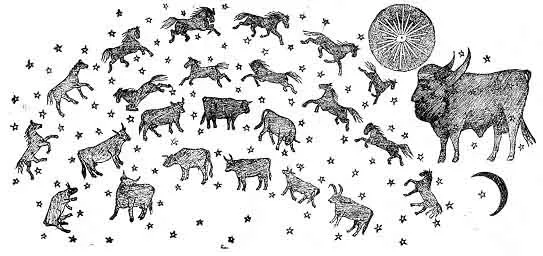
Plate 70.
図版70。
73. Gam, sacrifice (Panic), in triumph.
73. Gam、犠牲(パン語)、勝利のうちの。
74. Woga, sacrifice (Panic), in repentence. O Woga, how can I forget thee, for in thy obedience to Agni is my great sin burnt up. From this day I will sin no more (Hiut). Let my chosen repeat the holy words of repentance whilst Agni feasteth in Gam or in Woga, for in that self-same hour do I hear them and absolve them their sins (Vede).
74. Woga、犠牲(パン語)、悔い改めのうちの。おお、Woga よ、どうして私があなたを忘れることができようか。Agni へのあなたの従順のうちに、私の大きな罪が焼き尽くされるのだから。この日から私はもう罪を犯さない(ヒウト語)。Agni が Gam または Woga のうちにごちそうを食べているあいだ、我が選ばれた者たちに悔い改めの聖なる言葉を繰り返させよ。まさにその同じ時に我は彼らを聞き、彼らの罪を赦すからである(ヴェーデ語)。
75. D'shom, mountain (Panic). Dhi'shon (Chine).
75. D'shom、山(パン語)。Dhi'shon(チネ語)。
76. Ug (Panic) a valley low down. Emeg (Aribania and Fonece). A deep gorge. Go'ug (Algonquin). Also Go'meg. Y'ng and Yu'hi'guag (Vede).
76. Ug(パン語)、低く下った谷。Emeg(アリバニア語とフォネセ語)。深い峡谷。Go'ug(アルゴンキン語)。また Go'meg。Y'ng と Yu'hi'guag(ヴェーデ語)。
77. Sa'fome (Panic), evil wind; evil chieftain among spirits, a God. A God in human shape. Believed by people in darkness to be the Creator of all things, and of man in his own image. (See p. 602 God and Ghad.) I'fome (Chine), an idol. They have made an idol and called it Iss'faum, i.e., Land God or God of the Earth. In those days the idolaters believed the Great Spirit had made Gods out of spirits in the lower heaven, and sent one of them to the earth and one to each of the stars. To the moon he gave four Gods. He who received the earth as his portion to command was called Lord (Sa'fome), i.e., earth wind. On his forehead shall be the sign of cross-bones. Vengeance is mine, saith the Lord (Sa'fome). (Fonece.) Jehova said: Not having stone images they have made an idol of the wind and called it Lord (Land God or Ghad). (Moses in Egypt.) Let my followers swear an oath against the Lord, for he is more hurtful than the stone idols, and they shall profess the Great Spirit, E-O-Ih, only. (Abraham.) See to it that the enemy fasteneth not an idol of the wind on the Faithists (Zarathustra). (Vede.) Not content to worship the Great One they have a representative, saying: He is the Only Begotten Son. Be ye wary of them (Brahma). (Naoli.) An earth God, i.e., evil God. They profess to feast his nostrils with the smell of burning flesh, saying: He alone can save; he, the mighty Sa'fome (Chine). Now judge ye them; for do they not engage in war, and are they not all idolatrous warriors? (Fus). A figure by the door-way of heathen temples.
77. Sa'fome(パン語)、悪い風。霊たちのもとの悪い首領、神。人の形をした神。暗さのうちにある人々によって、すべてのものの創造者であり、自分自身の像に人を作った者であると信じられている。(602頁、God と Ghad を見よ。)I'fome(チネ語)、偶像。彼らは偶像を作り、それを Iss'faum、すなわち地の神、あるいは大地の神と呼んだ。その日々、偶像崇拝者たちは、大いなる霊が下の天の霊たちから神々を作り、そのうちの一人を地に、一人ずつを星々のそれぞれに送ったと信じていた。月には四人の神々を与えた。地を自分の命じる分として受け取った者は主(Sa'fome)、すなわち地の風と呼ばれた。彼の額には交差した骨のしるしがあるであろう。復讐は我がものである、と主(Sa'fome)は言う(フォネセ語)。ジェホヴァは言われた。石の像を持たないので、彼らは風の偶像を作り、それを主(地の神、あるいは Ghad)と呼んだ(エジプトにおけるモーセ)。我に従う者たちに主に反対する誓いを立てさせよ。彼は石の偶像よりも有害だからである。そして彼らはただ大いなる霊 E-O-Ih だけを公言するであろう(アブラハム)。敵がフェイスィストたちに風の偶像を結びつけないよう気をつけよ(ザラトゥストラ)(ヴェーデ語)。大いなる方を崇めることに満足せず、彼らは代理人を持ち、彼はただ一人の生まれた息子である、と言う。彼らに用心せよ(ブラフマ)(ナオリ)。地の神、すなわち悪い神。彼らは焼ける肉のにおいで彼の鼻を楽しませると公言し、彼だけが救うことができる、彼、力強い Sa'fome が、と言う(チネ語)。さて、あなたたちは彼らを裁け。彼らは戦争に携わらないであろうか。彼らはみな偶像を崇める戦士ではないか(フス語)。異教の神殿の戸口のそばの像。
78. S'un (Panic), spring, or beginning. (Chine.)
78. S'un(パン語)、春、あるいは始まり(チネ語)。
79. Ka'un (Panic), summer, beauty. (Algonquin.)
79. Ka'un(パン語)、夏、美しさ(アルゴンキン語)。
80. Sam'hoi (Panic), Sam'howh (Chine), autumn.
80. Sam'hoi(パン語)、Sam'howh(チネ語)、秋。
81. P'boa (Panic), the destroyer, winter. M'boa (Chine). Peboa (Algonquin).
81. P'boa(パン語)、破壊者、冬。M'boa(チネ語)。Peboa(アルゴンキン語)。
82. Gung, love-offering (Panic). Oe'gwong (Chine). Go'ongwe (Algonquin).
82. Gung、愛の献げ物(パン語)。Oe'gwong(チネ語)。Go'ongwe(アルゴンキン語)。
83. Hiss'bak, against each other or divided; something between (Panic). Cold-hearted; misunderstanding. Iss'bagd (Chine). He is on a mountain or in the north Sy'gis yak (Vede).
83. Hiss'bak、互いに逆らう、あるいは分かれた。あいだにある何か(パン語)。冷たい心。誤解。Iss'bagd(チネ語)。彼は山の上に、あるいは北にいる、Sy'gis yak(ヴェーデ語)。
84. Goh (Panic), one who rejoiceth. Gul (Ebra), to leap with joy, joyous. E'goh (Chine). A sound the mouth uttereth in sudden joy, as Gah, ha, or E'goh'e. He'ha! (English). The figure of a man laughing, with nothing near him. If the figure point to something, as a man, then it is pronounced Gah'gan, or to a house, Gah'oke, etc.
84. Goh(パン語)、喜ぶ者。Gul(エブラ語)、喜びで跳ねること、喜ばしい。E'goh(チネ語)。突然の喜びのうちに口が発する音、Gah、ha、あるいは E'goh'e のように。He'ha!(英語)。近くに何もない、笑っている人の像。もし像が何かを指しているなら、たとえば人なら、そのときそれは Gah'gan と発音され、家なら Gah'oke、などとなる。
85. Hiss'sa, a lawyer. One whose soul is full of serpents. The figure of a man with a serpent's head issuing. Yi-saga (Vede).
85. Hiss'sa、法律家。その魂が蛇でいっぱいの者。蛇の頭が出ている人の像。Yi-saga(ヴェーデ語)。
86. M'oh, prayer. Also a woman preacher. Ni'Ghoo (Chine.). Ni'oh'Ghoo (Algonquin). A'ho'en (Fonece). Kohen (Hebrew). Yoh, hadragi (Vede).
86. M'oh、祈り。また女の説教者。Ni'Ghoo(チネ語)。Ni'oh'Ghoo(アルゴンキン語)。A'ho'en(フォネセ語)。Kohen(ヘブライ語)。Yoh、hadragi(ヴェーデ語)。
87. Dan'gan (Panic), prophet. A man of light. Clear sight. Es'sight. An inter-seer (Vede). Yajvan, one who by much sacrifice hath attained to soul-seeing (Pali). Wa'gan-wag (Algonquin).
87. Dan'gan(パン語)、預言者。光の人。はっきりと見ること。エスの視力。内を見る者(ヴェーデ語)。Yajvan、多くの犠牲によって魂で見ることに達した者(パーリ語)。Wa'gan-wag(アルゴンキン語)。
88. Mug (Panic), a philosopher. The sign of a man resting on his elbows. The subject depends on his relative place in a tablet.
88. Mug(パン語)、哲学者。肘で体を支えている人のしるし。その主題は、書板の中でのその相対的な位置によって決まる。
89. Ho'Joss (Panic), a man-God (Ghad); a human face with horns. A God of the lower heaven. Think not I am come to send peace on earth; I come not to send peace, but a sword. I come to set man at variance against his father, and a daughter against her mother (Christ). Ho'Joss shall reign in my temples; before him shall every knee bow and every tongue confess Sheking (Chine). He was tried on the wheel and Es released him. He shall be my Joss, and no other Joss shall be Ho'Joss (Poit). A sign of a wheel or of a cross. Save ye be tried on the cross ye are unworthy to be exalted (Anra'mainyus). I come with a two-edged sword (Anubis). (Aribania.) My people shall be warriors (Man'sa'ghad). Any spirit who commands or rules by force; any exclusive Savior of men. Jehovih saith, Whoever professeth the sword and the spear and the sling and the pitchfork shall perish thereby. (Zarathustra.) Overthrow of Osiris in the lower heaven. Because Osiris hath said, I am Ho'Joss, the Savior of men, and none shall ascend to the Father but through me, so shall Osiris be hated of men (Kii). Was it not so with Tistyra, and he was changed into a star? (Pali.) A figure of authority at the altar in heathen temples. A face with or without horns. A man bound on a wheel. A man bound on a cross. Jehovih said: Have I not said, He that proclaimeth the sword shall perish by the sword? Behold ye then the Ghad they worship (Osiris).
89. Ho'Joss(パン語)、人なる神(Ghad)。角のある人の顔。下の天の神。我が地上に平和を送るために来たと思うな。我は平和を送るためではなく、剣を送るために来る。我は人をその父と、娘をその母と仲たがいさせるために来る(キリスト)。Ho'Joss は我が神殿で治めるであろう。彼の前にすべての膝はかがみ、すべての舌は Sheking を告白するであろう(チネ語)。彼は車輪の上で試され、エスが彼を解き放った。彼は我が Joss となり、ほかのどんな Joss も Ho'Joss とはならないであろう(ポイト語)。車輪の、あるいは十字架のしるし。あなたたちが十字架の上で試されないかぎり、あなたたちは高められるに値しない(アンラ・マイニュス)。我は両刃の剣を持って来る(アヌビス)(アリバニア語)。我が民は戦士となるであろう(マンサガド)。力によって命じ、あるいは支配するどんな霊も。人のどんな排他的な救い主も。ジェホヴィは言われる。剣と槍と投石器と熊手を公言する者は誰でも、それによって滅びるであろう(ザラトゥストラ)。下の天におけるオシリスの打倒。オシリスが、我は Ho'Joss、人の救い主である、我を通してでなければ誰も父のもとへ上らないであろう、と言ったので、そのようにオシリスは人々に憎まれるであろう(キイ語)。ティスティラもそうではなかったか。そして彼は星に変えられた(パーリ語)。異教の神殿の祭壇における権威の像。角のある、あるいは角のない顔。車輪に縛られた人。十字架に縛られた人。ジェホヴィは言われた。我は、剣を宣言する者は剣によって滅びるであろう、と言わなかったか。それでは、彼らが崇める Ghad を見よ(オシリス)。
90. Plow (Panic), ship; Oniyyah (Fonece). The sound the sailors utter. They watched the star Hiyalavi to know whether the plow sailed. A vessel or tool or instrument that divides its own road. His spirit was as a plow, and the ancients were confounded in his Hoiy (furrows). Gu'iy'yoh, the furrow of a ship and the ship and the voice of the sailors (Ebra). Applied to oratory, the sign of oratory conferred by the king. A badge of a ship (plow). He hath been awarded, or he hath the degree of plow (ship). He is the king's plow (Ayria).
90. Plow(パン語)、船。Oniyyah(フォネセ語)。船乗りたちが発する音。彼らは、plow が航海したかどうかを知るために、星 Hiyalavi を見張った。自分の道を切り分ける船、または道具、または器具。彼の霊は plow のようであり、古代の者たちは彼の Hoiy(畝)のうちに混乱させられた。Gu'iy'yoh、船の畝と船と船乗りたちの声(エブラ語)。弁論に当てられて、王によって授けられた弁論のしるし。船(plow)の記章。彼は授けられた、あるいは彼は plow(船)の位を持っている。彼は王の plow である(アイリア語)。
91. Oug (Panic), spear. Gag or gagged p. 603 (English). Gug (Algonquin), an instrument of war with blades. A symbol of defence and offence.
91. Oug(パン語)、槍。Gag または gagged(603頁)(英語)。Gug(アルゴンキン語)、刃のある戦争の道具。防御と攻撃の象徴。
92. Ung'wan (Panic), a symbol to an enemy.
92. Ung'wan(パン語)、敵への象徴。
93. Shi or Ski (Panic), woven fabric, cloth.
93. Shi または Ski(パン語)、織られた布、布地。
94. Mek (Panic). Spider's web. An emblem of industry. O'sehel (Fonece). Oshek (Fus). M'meka (Kii). Gow'mek (Chine). Place the mek at the pillars of the altar that my followers may learn industry (Zarathustra). When they had conferred the degree of dawn upon them the king said: Inasmuch as ye of the haunted chamber have been found worthy, receive ye this sign of industry in the name of the All Pure Zarathustra (Vede). A badge bestowed in the second degree of Iz (Faithist), with a spider's web engraven. One of the graven images forbidden to the Leviticans by Moses.
94. Mek(パン語)。蜘蛛の巣。勤勉の標章。O'sehel(フォネセ語)。Oshek(フス語)。M'meka(キイ語)。Gow'mek(チネ語)。我に従う者たちが勤勉を学ぶことができるよう、mek を祭壇の柱のところに置け(ザラトゥストラ)。彼らが彼らに夜明けの位を授けたとき、王は言った。取りつかれた部屋のあなたたちはふさわしいと見いだされたので、すべてに清いザラトゥストラの名において、この勤勉のしるしを受けよ(ヴェーデ語)。イズ(フェイスィスト)の第二の位で授けられる、蜘蛛の巣を刻んだ記章。モーセによってレビ人に禁じられた刻まれた像の一つ。
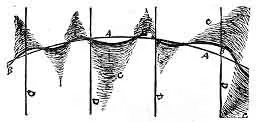
Plate 71.--A, A, road of travel of the vortex. Tow'-Sang, or solar family of the Great Serpent. B, B, deviation from a straight line. (See plate 46). C, C, C, C, vortices of other systems of worlds. D, D, D, D, dan, dan, dan, dan; that is, from D to D, is three thousand years. The open space in the curve B, B, near the centre of the plate, indicates the place of the serpent in this day.
図版71 A、A、渦の移動の道。Tow'-Sang、すなわち大いなる蛇の太陽の家族。B、B、直線からのずれ。(図版46を見よ。)C、C、C、C、ほかの世界の体系の渦。D、D、D、D、dan、dan、dan、dan。すなわち、D から D までが三千年である。図版の中心近くの、曲線 B、B の開いた空間は、この日の蛇の場所を示す。
95. Fe (Panic), a lever. One of the sacred emblems of power belonging to the third degree of Zerl (Faithist), in the order of Poit.
95. Fe(パン語)、てこ。ポイトの秩序における、ゼルル(フェイスィスト)の第三の位に属する力の聖なる標章の一つ。
96. Miji (Panic), a screw. One of the sacred emblems of power, belonging also to the third degree of Faithist (Zarathustra).
96. Miji(パン語)、ねじ。同じくフェイスィストの第三の位に属する、力の聖なる標章の一つ(ザラトゥストラ)。
97. Sam'miji (Panic). The wedge. The seventh emblem in the third degree of Faithist (Chine).
97. Sam'miji(パン語)。くさび。フェイスィストの第三の位における第七の標章(チネ語)。
98. Che or Kouak'che (Panic), a compass and calliper. Koakchah (Chine). K'cho (Algonquin).
98. Che または Kouak'che(パン語)、コンパスとカリパス。Koakchah(チネ語)。K'cho(アルゴンキン語)。
99. Chine (Panic). Pitchfork, an implement for farmers. A war weapon in olden times. Also a country of warriors (Chine). Monosyllabic. An iesu.
99. Chine(パン語)。熊手、農夫のための道具。昔の時代の戦争の武器。また戦士の国(チネ語)。単音節の。iesu。
100. Unh'eng, fifth size (Panic), designated by a line.
100. Unh'eng、五番目の大きさ(パン語)、線で示される。
101. Sar'eng, fourth size (Panic), designated by a line.
101. Sar'eng、四番目の大きさ(パン語)、線で示される。
102. Sam'eng, third size (Panic), designated by a line.
102. Sam'eng、三番目の大きさ(パン語)、線で示される。
103. Tek'eng, second size (Panic), designated by a line.
103. Tek'eng、二番目の大きさ(パン語)、線で示される。
104. Esk'eng, first size (Panic), designated by a line.
104. Esk'eng、一番目の大きさ(パン語)、線で示される。
105. Eng. Size in abstract (Panic), no line.
105. Eng。抽象における大きさ(パン語)、線なし。
106. Um (Panic), direction of motion. As the spear pointeth, so shall the tablet be interpreted.
106. Um(パン語)、動きの方向。槍が指すとおりに、そのように書板は解き明かされるであろう。
107. Gan'um, direction of flight. Profile signifieth going; portrait, coming.
107. Gan'um、飛ぶ方向。横顔は行くことを、正面の顔は来ることを表す。
108. Git'um. The high priest shall set the sign on the moon that the unlearned may also know the sacred days of Man, i.e., Mas. [See Git.] (Zarathustra.)
108. Git'um。大祭司は月の上にしるしを置くであろう。学びのない者たちも Man、すなわち Mas の聖なる日々を知ることができるように。[Git を見よ。](ザラトゥストラ)
109. Git'ow'wn (Panic), relating to the Zodiac or to the motion of the sun. The high priest shall designate by the Um (spear), the motion of the sun and moon and stars, so that when the unlearned come to the temple to worship they may also learn of my lights in heaven. (Zarathustra.)
109. Git'ow'wn(パン語)、黄道帯に、あるいは太陽の動きに関わるもの。大祭司は Um(槍)によって、太陽と月と星々の動きを示すであろう。学びのない者たちが礼拝しに神殿に来るとき、彼らも天にある我が光について学ぶことができるように(ザラトゥストラ)。
110. V.Work-'um. (Panic) Course of vortex. [See Work.]
110. V.Work-'um(パン語)。渦の進路。[Work を見よ。]
111. Gan (Panic) Man. Profile, man or mankind. Portrait, man only, and not woman.
111. Gan(パン語)、人。横顔は、人または人類。正面の顔は、男だけであって女ではない。
p. 604
604頁
112. M'gan (Panic), a woman; i.e., less than man, or little man.
112. M'gan(パン語)、女。すなわち、男より小さいもの、あるいは小さな男。
113. M'be (Panic). The word beast or female.
113. M'be(パン語)。獣、あるいは雌という語。
114. Be (Panic), Beast. The written symbol as applying to the animal man in contradistinction to spirit.
114. Be(パン語)、獣。霊に対して区別される、動物としての人に当てられる書かれた象徴。
115. Hiss'pe (Panic), serpent-like, especially of spirits. The spirits gained dominion over mortals by giving them counsel in getting earthly things. (Brahma.) Rather shall my chosen consult the spirits to learn to purity themselves, and to grow in spiritual things. (Moses.)
115. Hiss'pe(パン語)、蛇のような、特に霊について。霊たちは、地のものを得ることについて死すべき者たちに助言を与えることによって、彼らに対する支配権を得た(ブラフマ)。むしろ我が選ばれた者たちは、自分を清めることを学び、霊のことにおいて成長するために、霊たちに相談するであろう(モーセ)。
116. S,'Pe or spe (Panic), spirit. Let the prophets observe in the temple those that come for wisdom, perceiving if their souls be set on things of earth (Zarathustra). Many of their women had familiar spirits, and they prostituted themselves in counseling with the multitude on earthly things (Moses), and they thus invited into Egypt spirits of the lower heavens who would not raise up from the earth; and when young babes were born they were obsessed, and these evil spirits in justification of their sins, taught re-incarnation. (Moses, in reference to the Egyptians.) An open figure of a spear, signifying a spiritual man or realm. A written character.
116. S,'Pe または spe(パン語)、霊。預言者たちに、知恵を求めて神殿に来る者たちを観察させ、彼らの魂が地のことに向けられているかどうかを見て取らせよ(ザラトゥストラ)。彼らの女たちの多くは使い魔の霊を持っていて、地のことについて群衆に助言することにおいて身を売った(モーセ)。そして彼らはこのように、地から上ろうとしない下の天々の霊たちをエジプトに招き入れた。そして幼い赤ちゃんたちが生まれたとき、彼らは取りつかれた。そしてこれらの悪い霊たちは、自分の罪を正当化して、生まれ変わりを教えた(エジプト人についてのモーセ)。霊の人または領域を表す、槍の開いた像。書かれた文字。
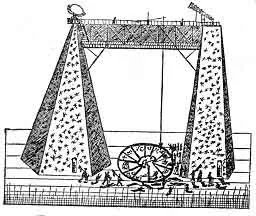
Plate 72.--STAR WORSHIPPERS.
図版72 星の崇拝者たち。
117. Y'eng (Panic), signifying a spirit with a corporean.
117. Y'eng(パン語)、コーポルの者と共にいる霊を表す。
118. D'hi (Panic), signifying ascent.
118. D'hi(パン語)、上昇を表す。
119. D'gani (Panic), signifying man ascending; progress.
119. D'gani(パン語)、上っていく人、進歩を表す。
120. S'pe'su(Panic), signifying angels descending.
120. S'pe'su(パン語)、下って来る天使たちを表す。
121. Che'vot or Chinvat (Panic). A word signifying the boundary of Work or Vortex (See verse 45). The supposed boundary of the lower heavens or atmospherea, and the inner boundary of the emancipated heavens, etherea. A bridge between the atmosphereans and ethereans. Eolin, the Great Spirit, said: On Corpor bring I forth man into life, and I give him a corporeal body, which is a womb for the spirit to dwell in; and when I deliver him from this womb he becometh an inhabitant of da'fome (atmospherea), where he abideth for a season, and I deliver him into Dan'gi (etherea), which lieth beyond Chinvat (Poit). A supposed line between the rotating atmosphere of a corporeal world and the ether that lieth beyond the Vortex. Beware of spirits and Gods who profess to save the souls of men, saying: Only through me shall ye escape the labor of atmospherea and arise to Chinvat. I declare unto you that all such spirits and Gods belong to the lower heavens, where they have kingdoms, and they are the tyrants thereof (Zarathustra). No man shall reach Chinvat but by perfecting himself either on earth or in the lower heavens (Abraham). What company judge ye ye are suited for in heaven (Confucius). Ye are neither wise nor strong (Kii). Being lazy they catch at the promises of Saviors, hoping to fly from the earth direct to Chinvat (Fus). Save ye have learned to perfect your own selves in wisdom and goodness ye shall not rise to Chinvat (Abraham). If a child can not reach manhood but by growth, how hope ye to reach Chinvat suddenly (Algonquin). The evil God, Anra'mainyus, said: Put your trust in me; I will save your souls from the labor of d'fome (atmospherea). But he hath been subdued by his own sins; and in a thousand years he can not reach Chinvat (Brahma).
121. Che'vot または Chinvat(パン語)。Work、すなわち渦の境界を表す語(第45節を見よ)。下の天々、すなわちアトモスフェレアの境界と思われているもの、また解放された天々、エセレアの内側の境界。アトモスフェレアの者たちとエセレアの者たちのあいだの橋。Eolin、大いなる霊は言われた。コーポルの上で、我は人を命へと生み出し、彼にコーポルの体を与える。それは霊が住むための胎である。そして我が彼をこの胎から救い出すとき、彼は da'fome(アトモスフェレア)の住民となり、そこにひと季節のあいだとどまる。そして我は彼を、チンヴァトの向こうにある Dan'gi(エセレア)へと救い出す(ポイト語)。コーポルの世界の回転する大気と、渦の向こうにあるエーテルとのあいだの線と思われているもの。人の魂を救うと公言して、ただ我を通してだけ、あなたたちはアトモスフェレアの労働を逃れ、チンヴァトへと上るであろう、と言う霊たちと神々に気をつけよ。我はあなたたちに宣言する。そのようなすべての霊たちと神々は下の天々に属し、そこに王国を持ち、その暴君である(ザラトゥストラ)。地上であれ下の天々においてであれ、自分を完全にすることによるのでなければ、誰もチンヴァトに達しないであろう(アブラハム)。天でどんな仲間に自分がふさわしいとあなたたちは判断するか(孔子)。あなたたちは賢くも強くもない(キイ語)。怠惰なので、彼らは救い主たちの約束に飛びつき、地からまっすぐチンヴァトへ飛ぶことを望む(フス語)。あなたたちが知恵と善良さにおいて自分自身を完全にすることを学ばないかぎり、あなたたちはチンヴァトへ上らないであろう(アブラハム)。もし子どもが成長によるのでなければ大人に達することができないなら、どうしてあなたたちは突然チンヴァトに達することを望むのか(アルゴンキン語)。悪い神アンラ・マイニュスは言った。私に信頼を置け。私はあなたたちの魂を d'fome(アトモスフェレア)の労働から救おう。しかし彼は自分自身の罪によって屈服させられた。そして千年のうちに、彼はチンヴァトに達することができない(ブラフマ)。
p. 605
605頁
Footnotes
脚注
598:* Equal to four million seven hundred thousand years.
598:* 四百七十万年に等しい。
コメント
まだコメントはありません。
コメントを読み込んでいます…